
The complete guide
Baby Car Camera Buyer's Guide, How to Choose and Set Up a Back Seat Camera
The problem with the back seat
Rear facing car seats are the right call for safety. They are also a bit maddening for the driver, because the child you most want to keep an eye on has their back to you and a high seat shell in the way. You hear a noise you cannot place. The baby goes quiet and you have no idea whether that means asleep or something else. The instinct is to turn around, and turning around at 60 km/h is the single most avoidable risk on the trip.
Mirrors were the first answer to this, and they half work. A convex mirror clipped to the rear headrest bounces an image into your rear view mirror, but it depends on two angles staying perfectly lined up, and it is useless once the sun goes down. Shift your seat position and the whole thing needs redoing.
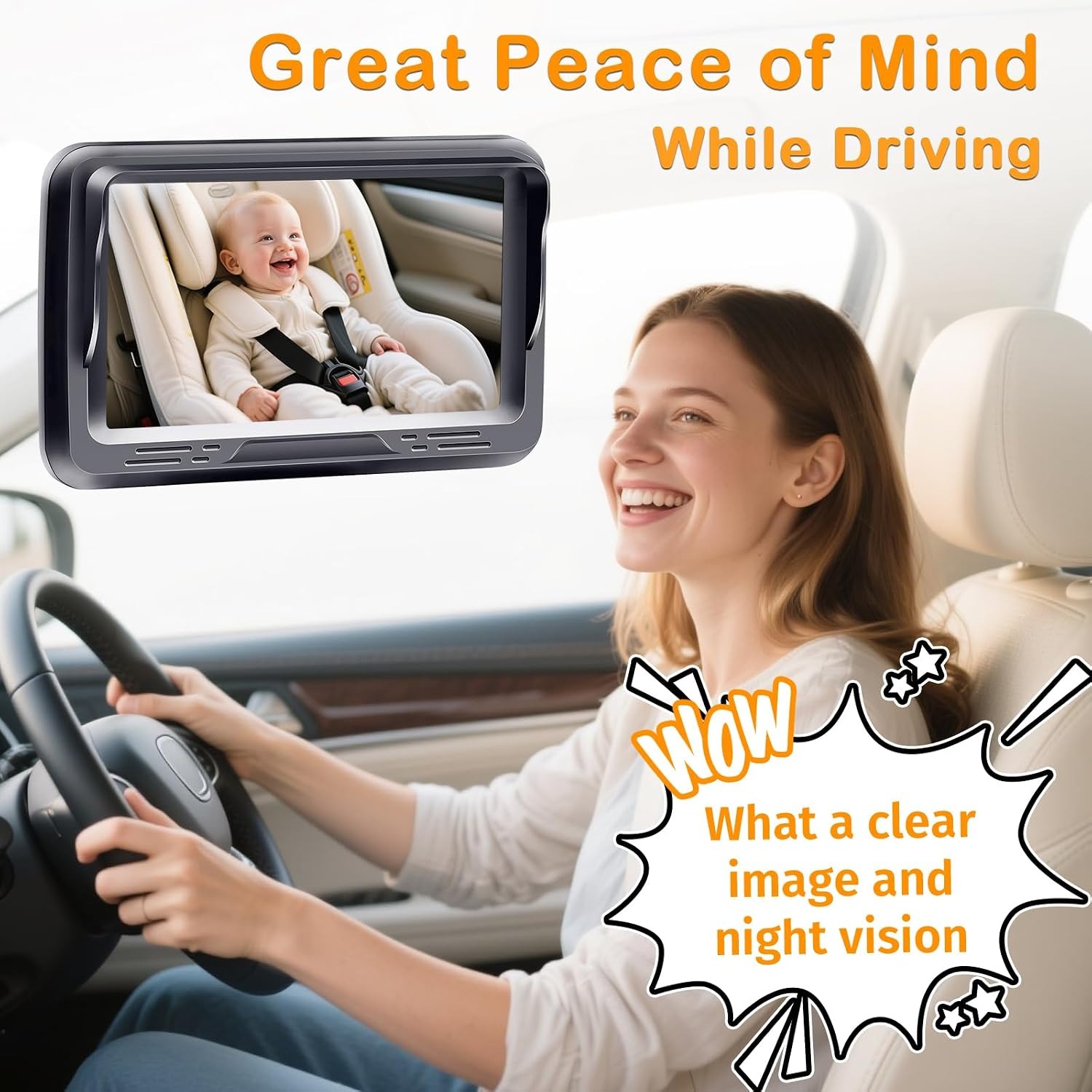
A baby car camera takes the guesswork out. A camera looks at the seat, a screen sits in your eyeline, and that is it. You glance across the way you would glance at a speedometer, and you see your child's face in colour.
How this one works
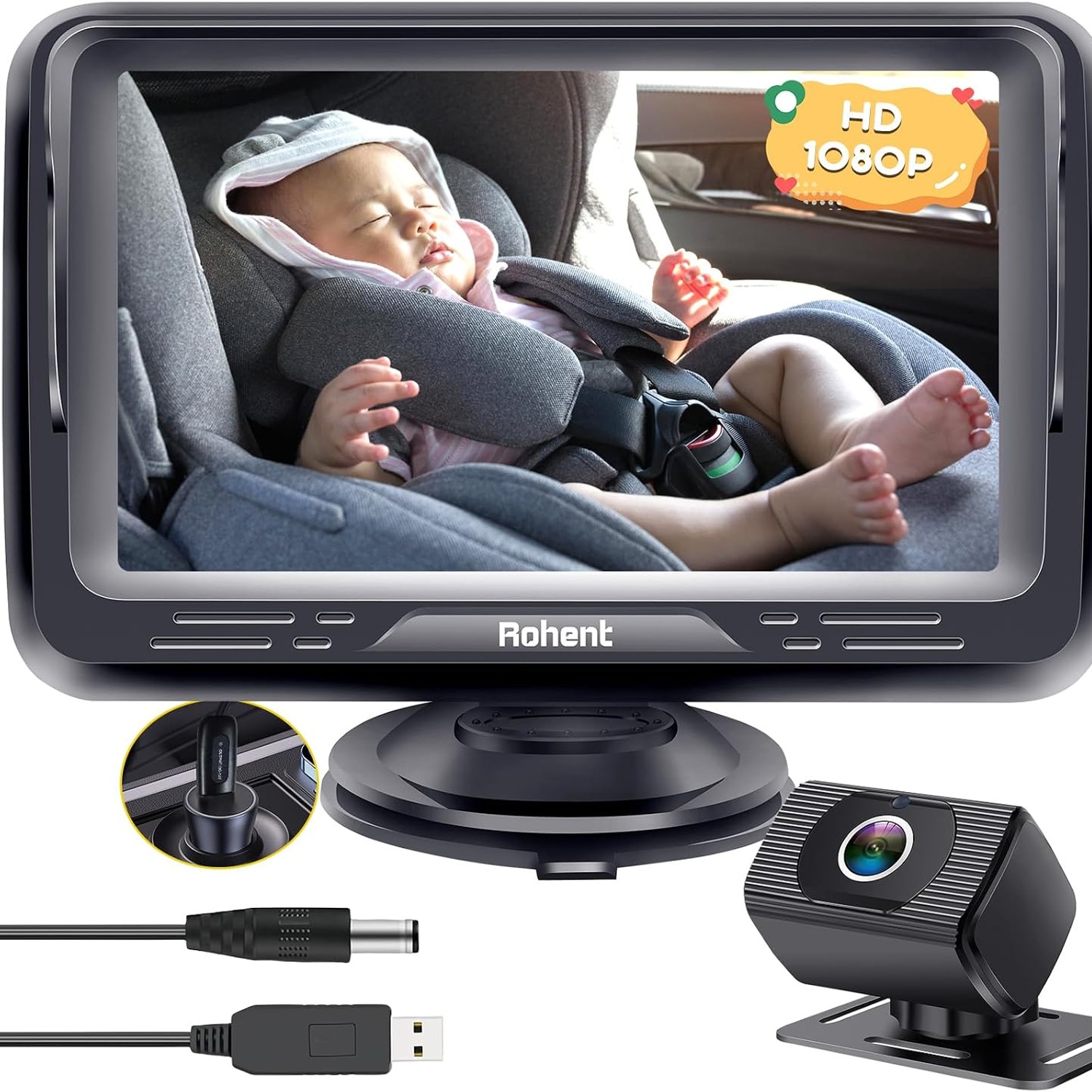
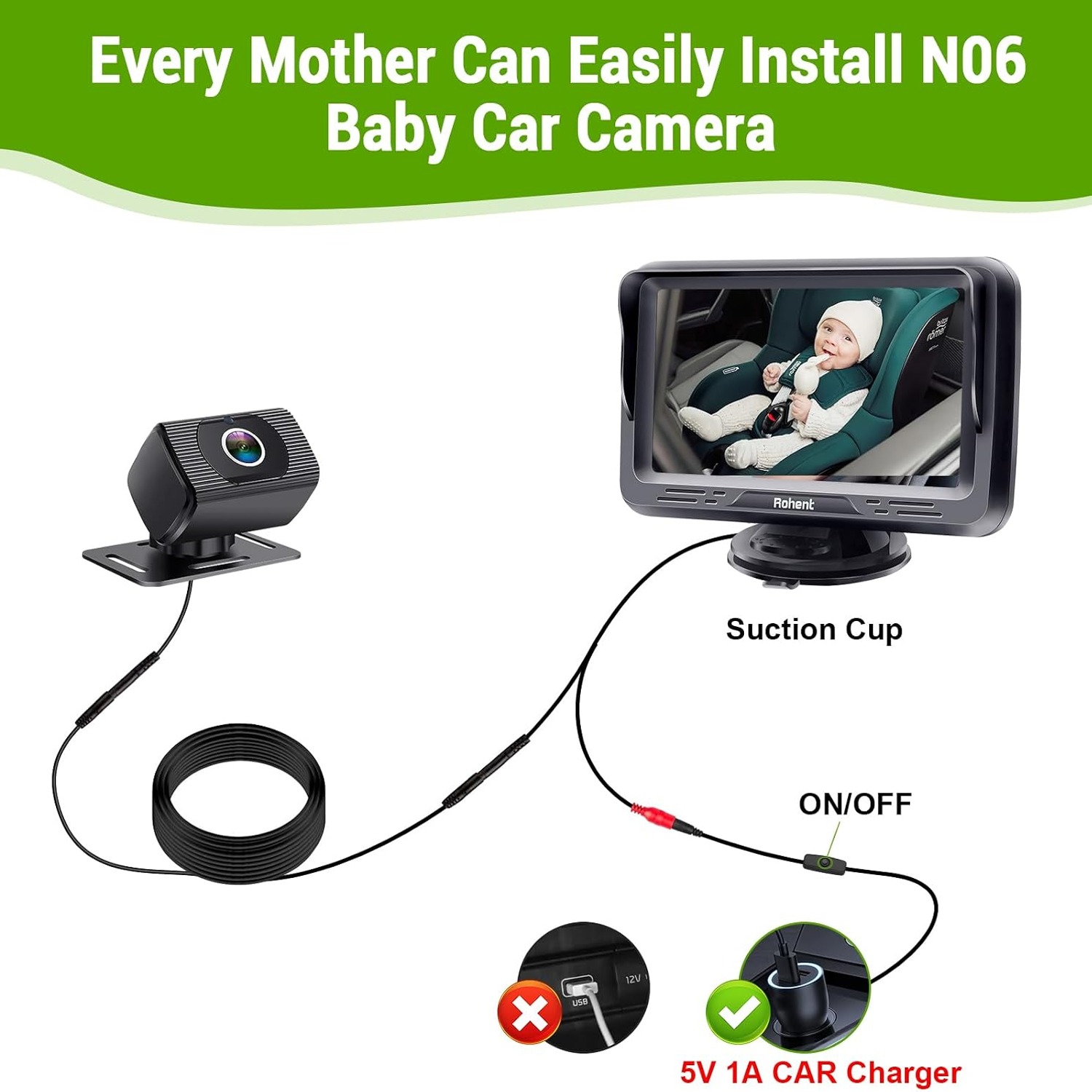
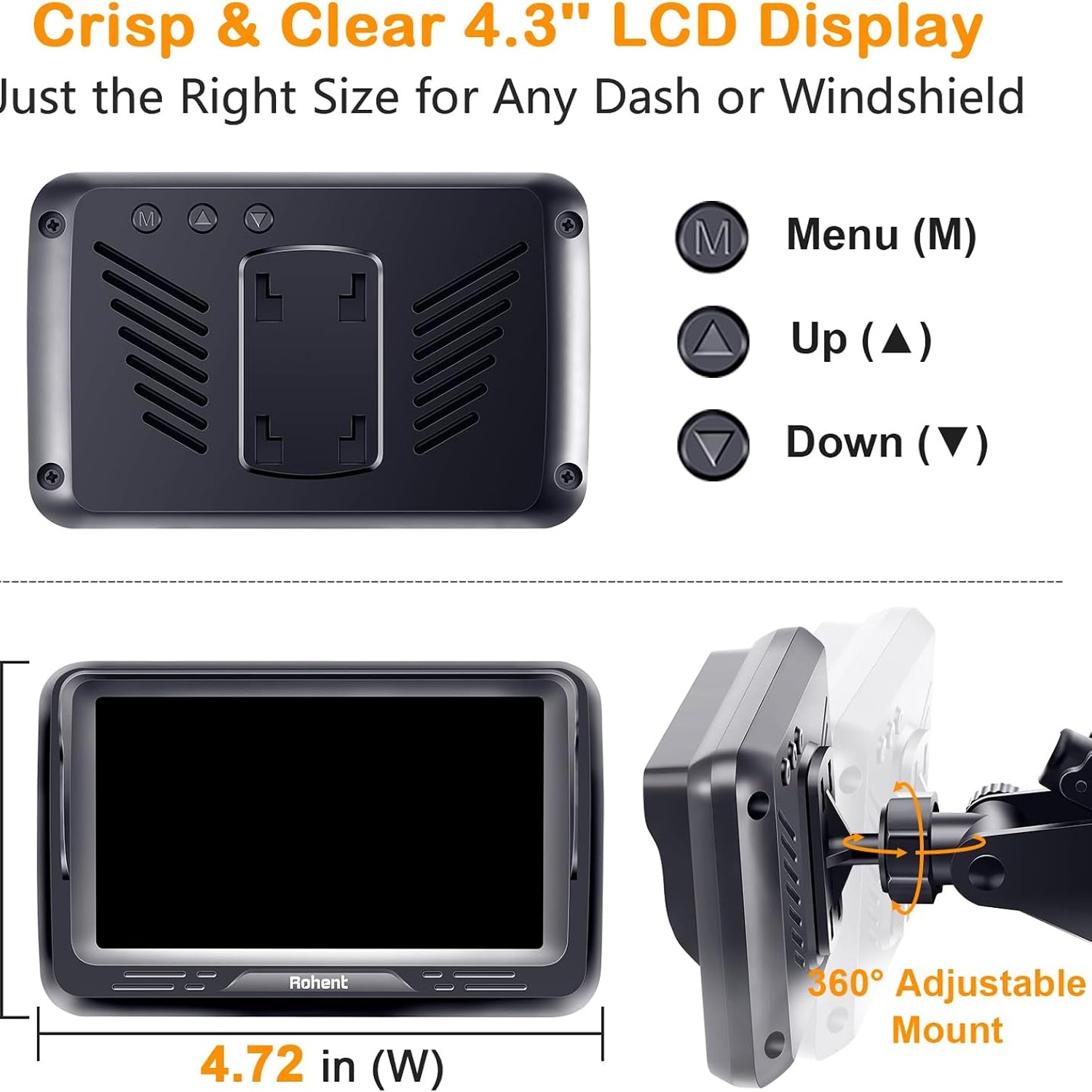
The setup here is deliberately simple. There are two pieces, a 1080p camera and a 4.3 inch monitor, joined by a cable. Power comes from the vehicle, not from batteries, which means nothing to charge and nothing to go flat in the middle of a long drive.
The camera shoots at 1080p with a 150 degree field of view. That resolution matters more than people expect. At lower resolutions a small face on a small screen turns into a blur, and you learn nothing from looking. At 1080p you can tell the difference between eyes closed and eyes open, which is really the whole point.
The 150 degree lens is the other half of the equation. Narrow lenses force you to aim precisely at one seat, and then the camera becomes useless the moment a second child is in the car. A wide view takes in the bench. If you are comparing options and want the best 1080p baby car camera for a two child car, field of view is the spec to check first.
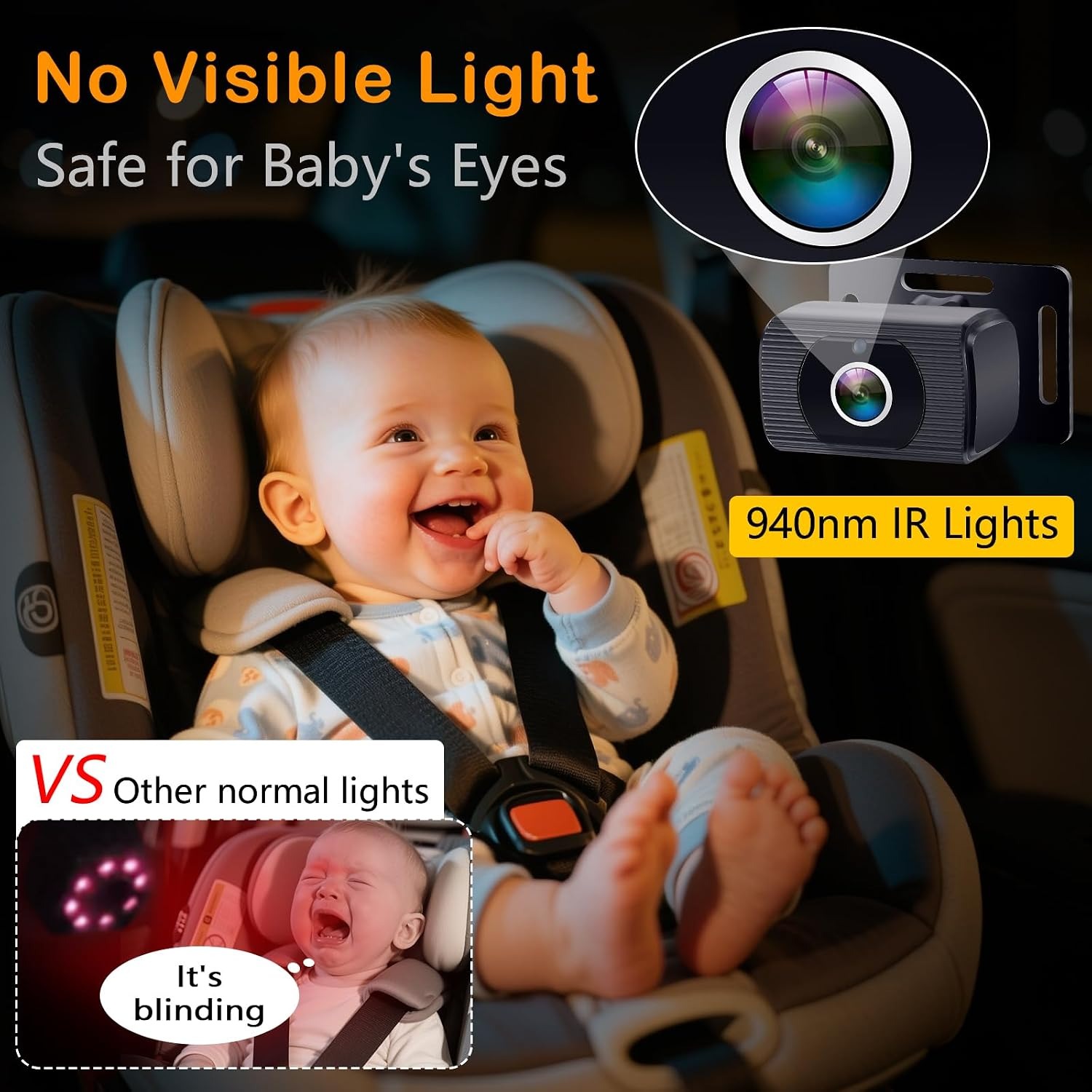
Night vision switches on by itself when the light falls. You are not pressing anything or flipping a setting as you drive into a tunnel. The monitor also lets you change brightness and contrast, which is genuinely useful. A screen set for midday glare is far too bright at 9pm and starts competing with your night vision.
Both the camera and the monitor sit on 360 degree adjustable brackets. The monitor uses a suction mount for the windscreen or another smooth surface. The camera can go wherever it gets a clean look down at the seat.
Who it suits
The obvious group is parents of newborns and infants in rear facing seats, where you have no visual contact at all. If that is you, this is the straightforward fix.
It also suits a second group that gets overlooked, parents of toddlers and small school age kids. Once a child is forward facing you can technically see them in the rear view mirror, but only their head, and only if they sit still. A camera shows you the seatbelt, the snack situation and whether someone has gone green around the gills before it becomes a cleaning job.
Long distance drivers get a lot out of it too. On a four hour trip the real cost of not being able to see the back seat is the number of times you pull over just to check. Being able to look without stopping saves time and keeps everyone calmer.
Finally, anyone sharing driving duties, grandparents, a nanny, a partner with a different car, benefits from a system that is not bolted in. Nothing here is permanent, so the set moves between cars in a couple of minutes.
How to choose
A few things separate a camera you keep using from one that ends up in a drawer.
Resolution and screen size work together. A 4.3 inch screen is a good middle ground, big enough to read at a glance, small enough that it does not block the windscreen. Pair that with 1080p and you get a picture that actually tells you something.
Wired or wireless is the next decision. Wireless sounds neater, but it adds pairing, interference and sometimes lag. This one is wired, which means it just comes on with the car and stays on. If you value reliability over tidy cables, wired is usually the right call, and most people hunting for the best wired baby car camera land there for exactly that reason.
Mounting matters more than it sounds. Suction mounts are quick and removable, but they need a smooth surface. Windscreen glass is ideal. Heavily textured dashboards are the worst case. Think about where the monitor will sit before you order, and keep it clear of airbag zones.
Then there is adjustability. A camera fixed at one angle only works in one car with one seat position. The 360 degree brackets here let you re-aim as your child grows and as the car seat moves from rear facing to forward facing. Parents who want the best suction mount car camera usually find themselves adjusting the angle every few months, so flexible brackets save a lot of frustration.
Setting it up properly
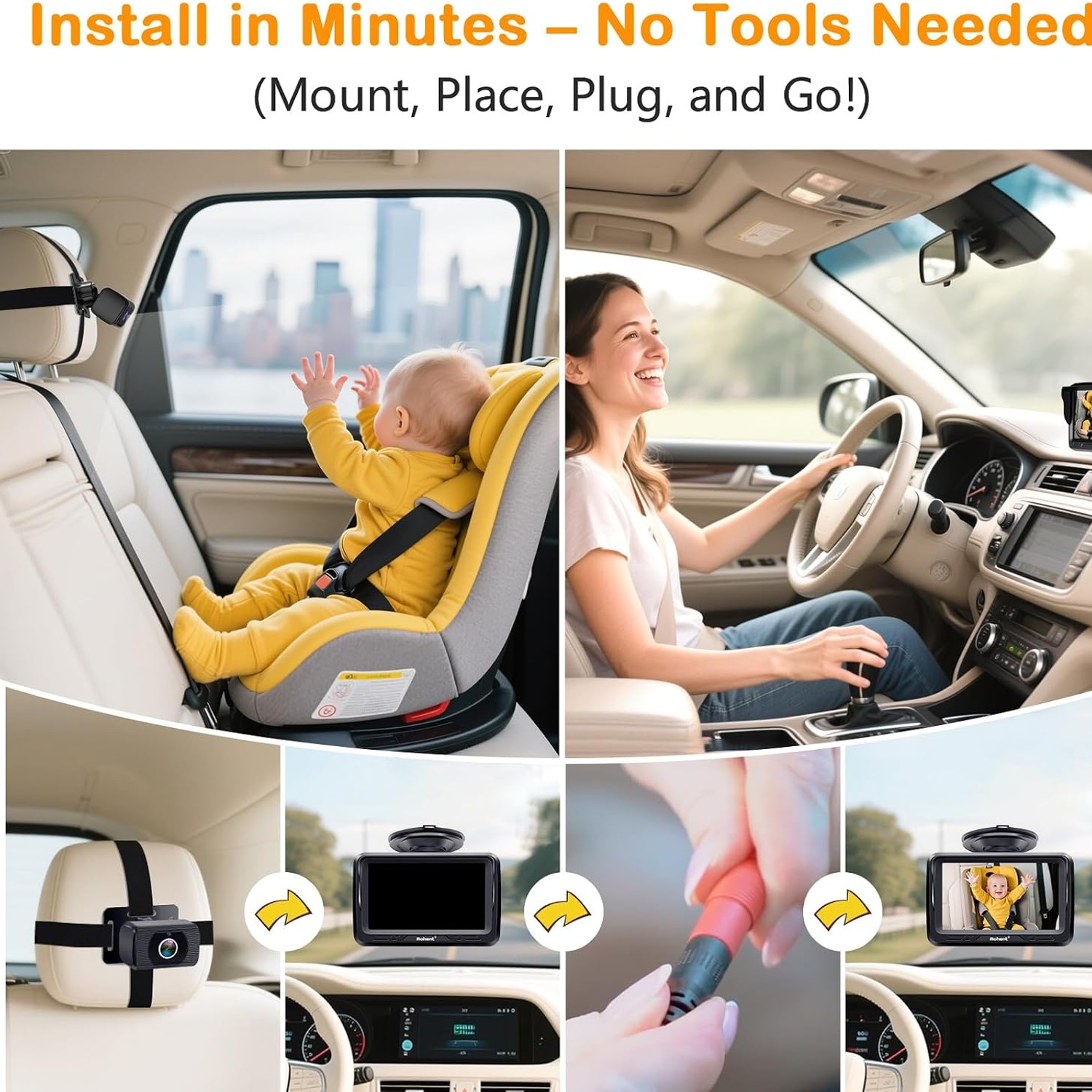
Do the install while parked, with plenty of light, and give yourself ten minutes rather than two.
Start with the camera. Mount it high, looking slightly down at the seat. From up high you see the face. From low down you mostly see the underside of the car seat shell. Aim it so the child sits roughly in the middle of the frame with a bit of space around them, because babies move.
Next, route the cable. Tuck it along the roof lining, down the door pillar trim and under the carpet edge where you can. The one thing to avoid is running cable through a door seal where it will get crushed every time the door shuts.
Then position the monitor. Low on the windscreen near the centre, or on the dash, tends to work best. You want a small eye movement, not a head turn. Check it does not sit in front of an airbag panel and does not block your view of the road or your wing mirrors.
Finally, set the picture. Adjust brightness and contrast with the car in the lighting you drive in most. Then take a short test drive around the block and see whether the angle holds and whether the screen is readable. Small fixes now save a lot of fiddling later.
Care and upkeep
There is not much to it. Wipe the screen and lens with a dry or lightly damp microfibre cloth, and skip the solvents and alcohol wipes, which can haze plastic over time.
Suction cups lose grip when they get dusty or when the car has been baking in the sun. A quick clean with a little water on both the cup and the glass brings the grip back. If the car is going to sit in extreme heat for days, unplugging the unit and stowing the monitor in the glovebox is sensible.
Check the cable run now and then, especially after anyone has been loading bags or folding seats. A cable that has worked its way into a seat rail is the most common cause of a sudden loss of picture.
The short version
If you drive with a rear facing car seat, you currently have a blind spot where your child is. A baby car camera closes it. This one gives you 1080p, a 150 degree view, automatic night vision and a 4.3 inch screen, on a wired connection that does not need an app, a phone or batteries. Setup is suction mount and plug in, with no tools and no drilling.
It is not a substitute for pulling over when something genuinely needs attention. What it does is stop you turning around for the ninety percent of moments that turn out to be nothing, and that alone makes every trip calmer for the driver and quieter for everyone else.