
The complete guide
How To Choose A Travel Camera Tripod That You Will Actually Carry
The problem with most tripods
Ask around and you will hear the same story. Someone buys a tripod, uses it twice, and then leaves it in a wardrobe for three years. It was not a bad tripod. It was just too heavy, too slow to set up, or too awkward to pack, so it never came along on the days when it would have helped.
That is a real loss, because a tripod changes what you can photograph. Low light at dusk. Long exposures of moving water. Self-portraits and group shots where you are actually in the frame. Sharp close-ups of small things. None of that works well handheld, no matter how good your camera's stabilisation is.
So the question is not "which tripod is the sturdiest". It is "which tripod will I carry". Those are different questions, and the second one matters more for anyone who shoots away from home.
Where weight and pack size fit in
A travel camera tripod lives or dies on two numbers. The first is weight. The second is folded length.
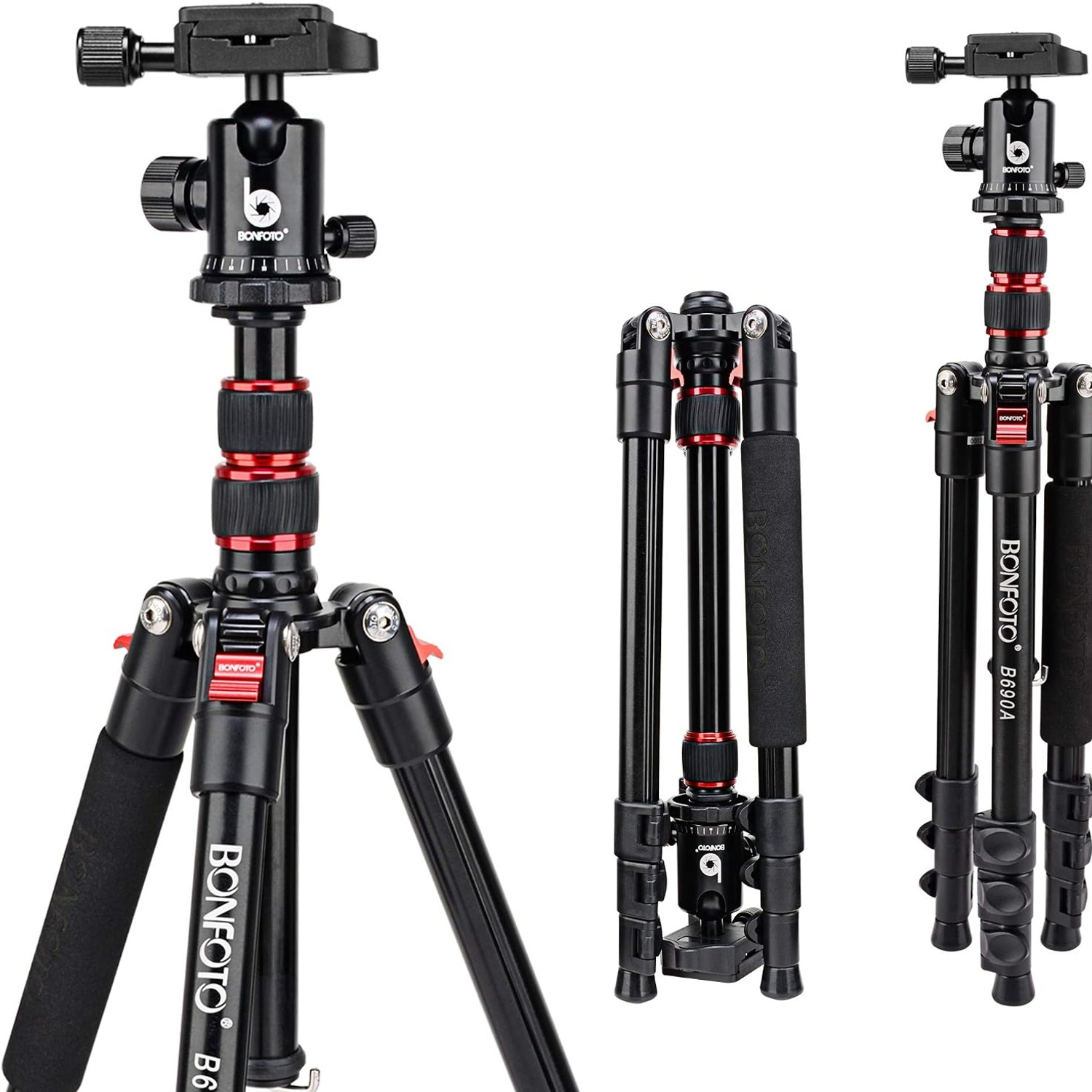
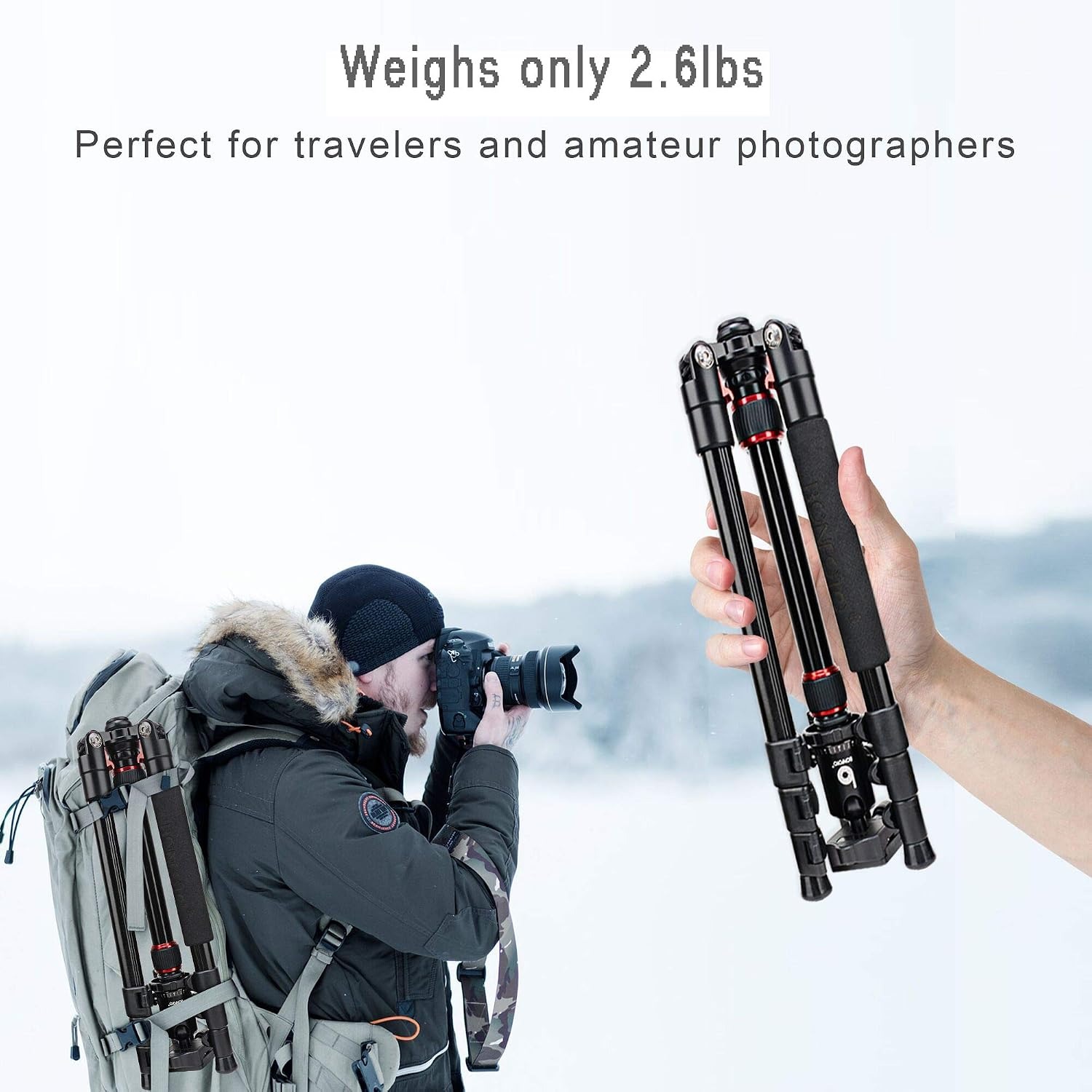
The BONFOTO B690A weighs 1.36 kg and folds to 14.5 inches. In practice that means it slides into a carry-on bag, clips to the side of a day pack, and does not noticeably change how your shoulders feel at the end of a walk. Heavier tripods in the 2.5 to 3 kg range are steadier, but you leave them at home more often, and a steady tripod in a cupboard takes no photographs.
The short folded length comes from the four-section legs. Each leg collapses into itself four times instead of three, so the packed bundle is shorter. The trade-off is that the lowest section is thinner than the top one. That is normal across the whole category, and there is a simple way to work around it, which we will come to.
How the legs and locks work
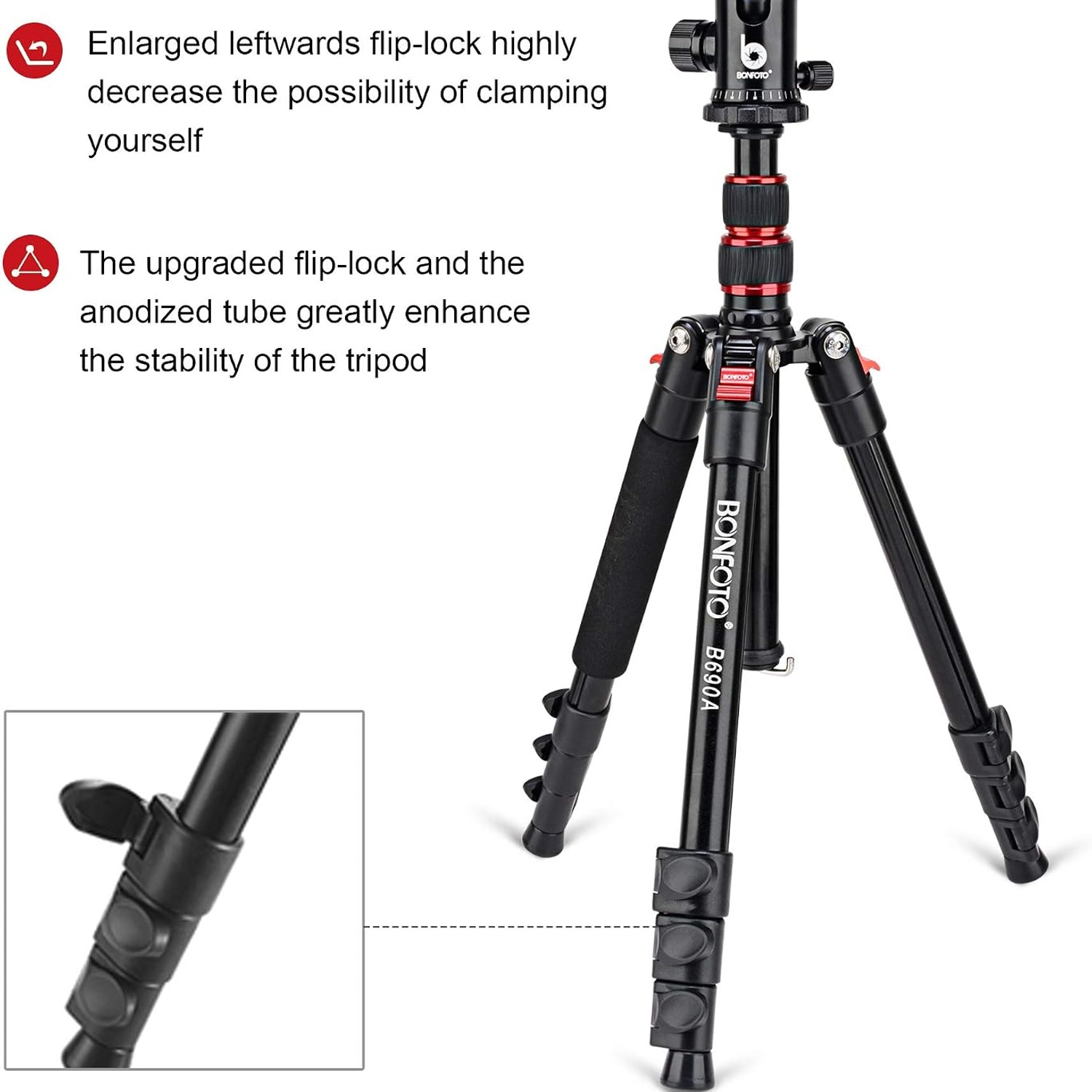
This tripod uses flip locks. You press a lever open, slide the section out, and press the lever closed again. Compared with twist collars, flip locks have two practical advantages. You can see whether a lock is open or closed from a metre away, and you can operate them with cold or wet hands.
Each leg also has its own angle lock, so you can set one leg flatter than the others. That is how you deal with uneven ground, a rocky shoreline or a set of stairs. You are not trying to keep all three feet on the same plane. You are trying to get the head level, and independent leg angles are how you do that.
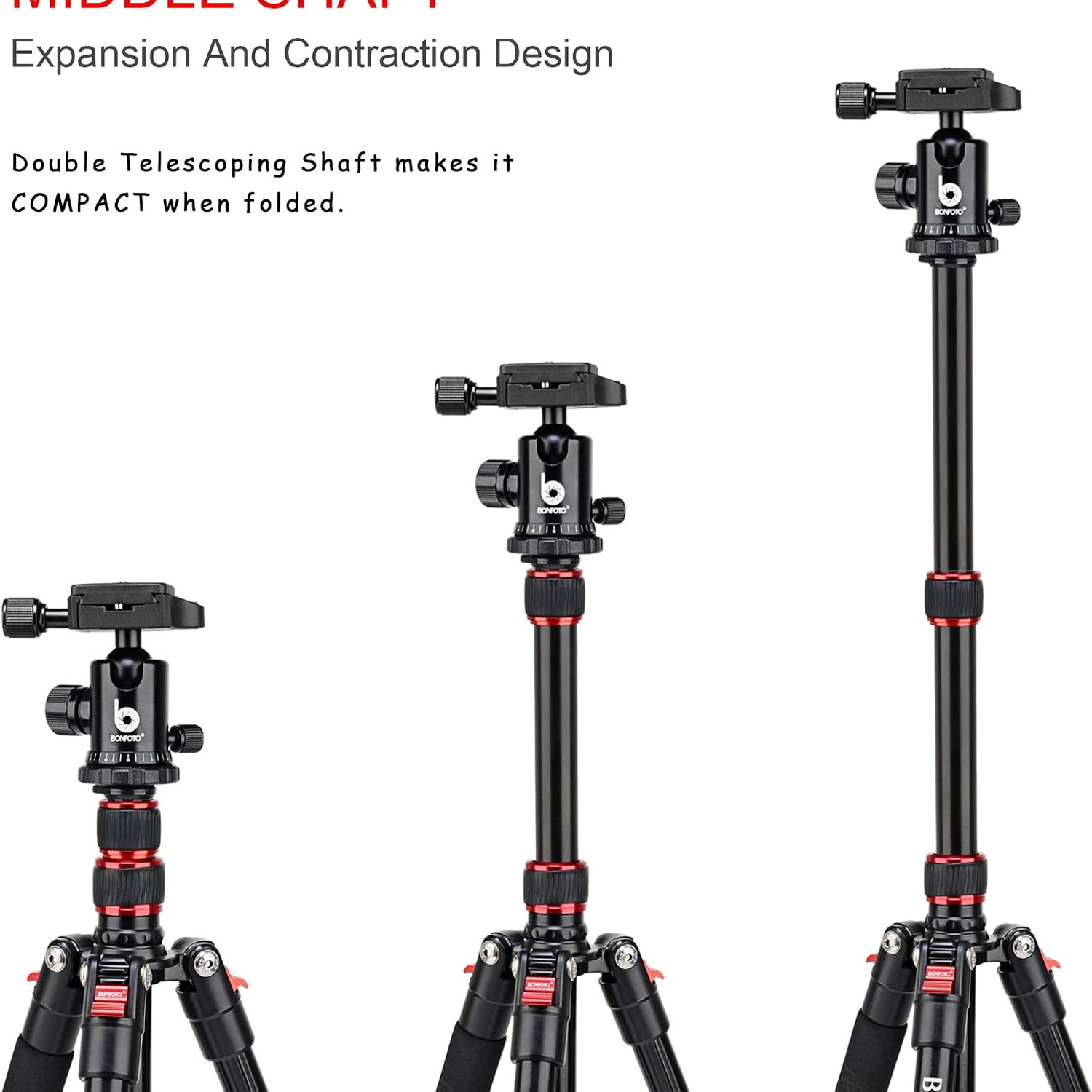
Fully extended, the tripod reaches 53.5 inches. Dropped right down with the legs splayed, it gets to 20.5 inches, which is low enough for most ground-level work.
Understanding the ball head
The head is the part you touch most, so it is worth knowing how it behaves.
A ball head holds a sphere in a socket. Loosen the control and the camera moves freely in any direction. Tighten it and everything locks at once. This is fast. You frame the shot, lock it, and shoot. Compare that with a three-way head where you adjust pan, tilt and roll on separate arms, which is more precise but slower.
This head rotates a full 360 degrees horizontally, which is what you want for panning across a landscape or shooting a panorama. It also tilts through 90 degrees, so the camera can flip into a vertical portrait orientation without you rebuilding the whole setup.
The quick-release plate screws onto your camera with a standard 1/4 inch thread and stays there. When you want the camera off, you release the clamp and lift. When you want it back on, you drop it in and close the clamp. Leave the plate on the camera permanently and the tripod stops being an obstacle.
What you can mount on it
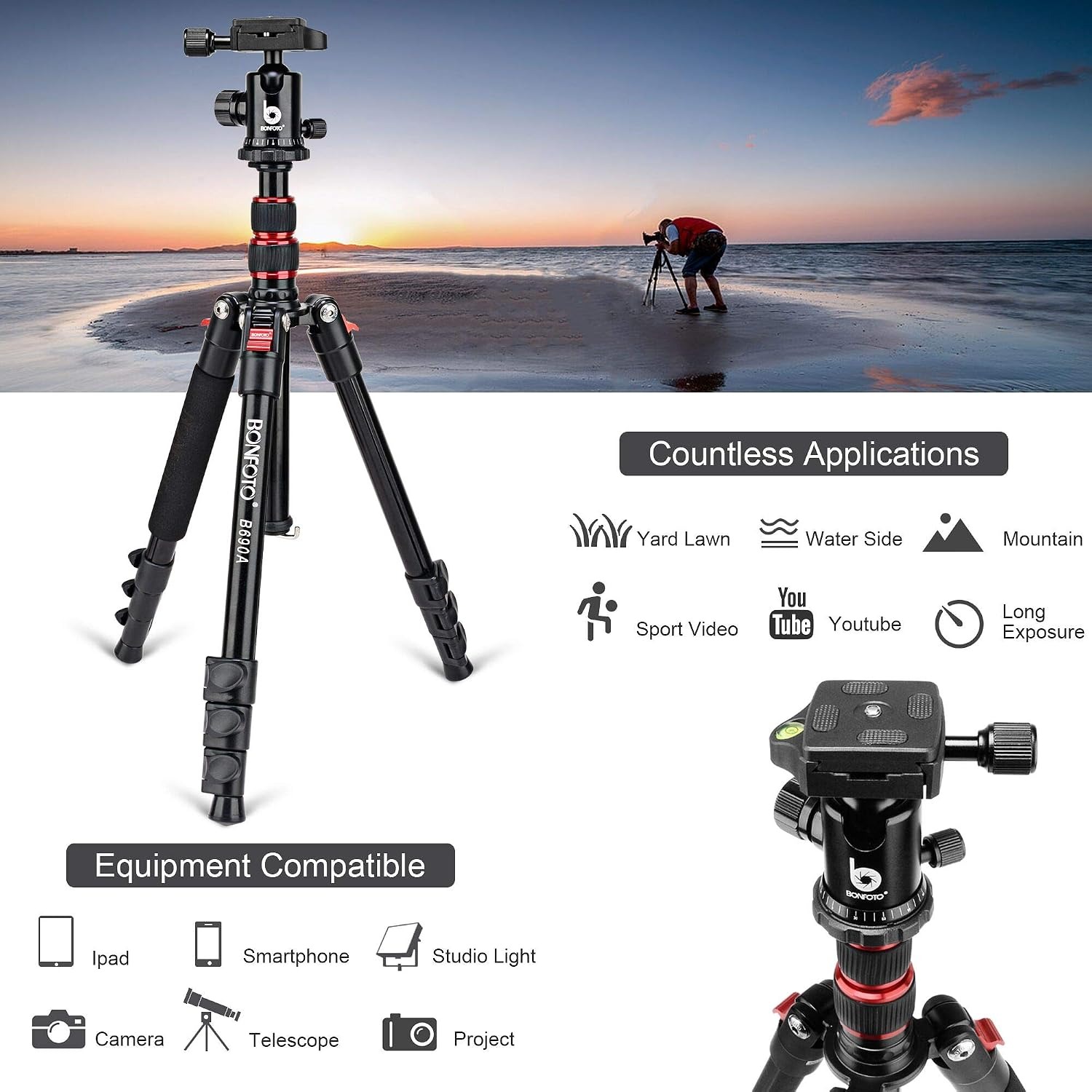
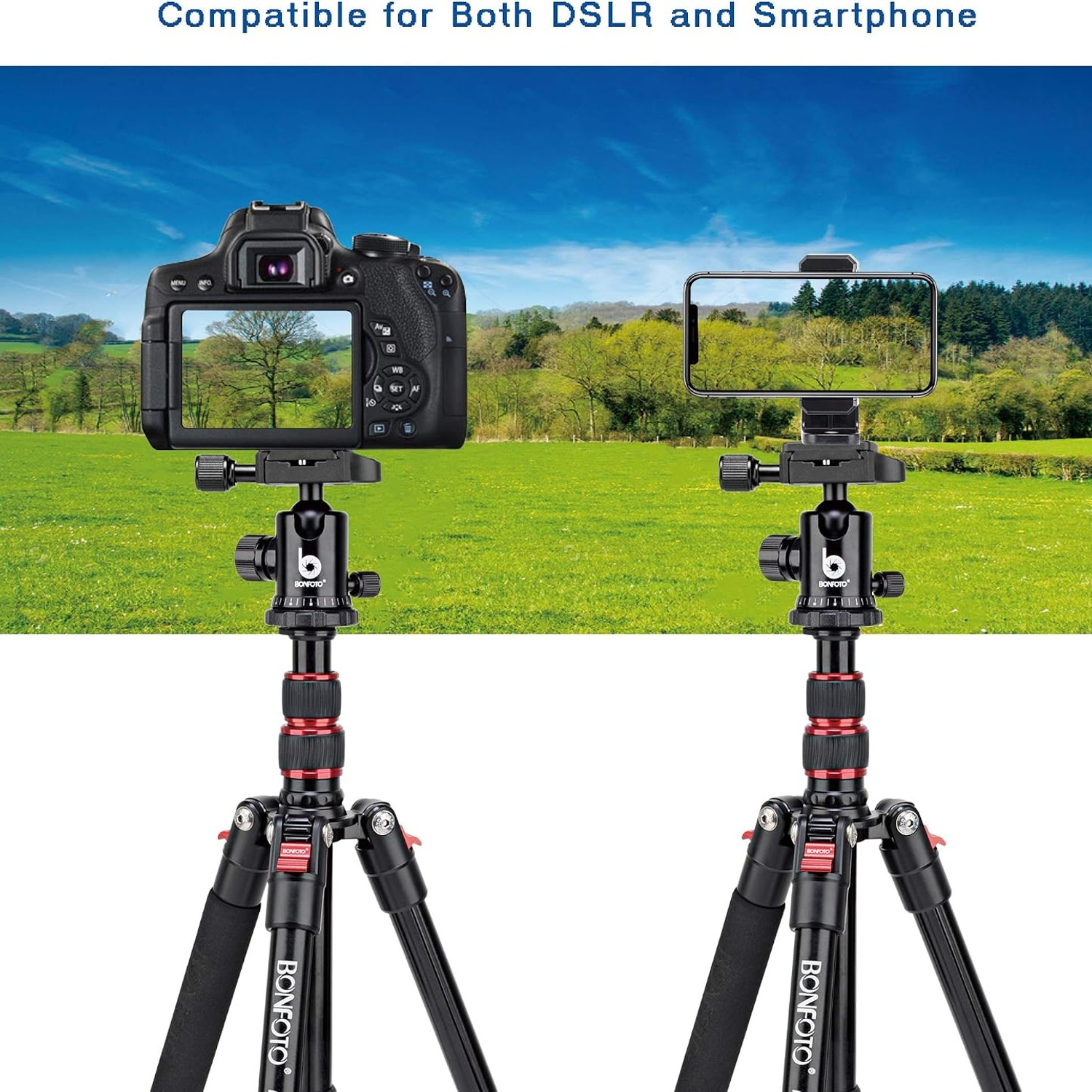
The 1/4 inch screw is the near-universal standard in photography. DSLRs and mirrorless cameras have this socket on the base. Phone clamps, small projectors, action camera adapters and many spotting scopes use the same thread.
The stated load limit is 8 kg. A mid-range DSLR with a 24-70 zoom is often around 1.5 kg, so you have a lot of margin. That margin is not just about whether the tripod collapses. It is about how much the setup shakes when you press the shutter or when wind catches the lens hood.
Two sensible habits with heavier gear. If your lens has its own tripod collar, use it instead of the camera body socket, so the weight sits over the centre of the tripod rather than hanging off the front. And hang a weight from the centre column hook. A camera bag or a water bottle in a net bag both work and cost nothing.
Who this suits, and who should look elsewhere
This suits travellers, hikers, hobbyists and anyone building a first serious kit. If your shooting involves walking to a location and setting up once you are there, a compact tripod for hiking makes more sense than a studio-weight model.
It also suits macro work. The centre column can be inverted so the camera hangs underneath, which gets you close to flowers, fungi and insects without lying flat on wet ground.
It is less suited to a few specific jobs. It does not convert into a monopod, so if you want that dual function you should look at a different design. It is not water resistant, so long days in rain or surf spray need care and a wipe-down afterwards. And a ball head is not a fluid video head, so smooth panning shots for film work are outside what this is built to do.
Setting it up properly
A tripod only works if you use it well. Three habits make the biggest difference.
Extend the thick sections first. The upper leg sections are wider and stiffer. If you only need two-thirds of the height, open the top two sections fully and leave the thin bottom ones retracted.
Keep the centre column down when you can. Raising the column turns your tripod into a stick balanced on three legs. Height from the legs is always steadier than height from the column.
Use a timer or a remote. Even a gentle press on the shutter button adds a small shake. A two-second self-timer removes it entirely and costs nothing.
Looking after it
Aluminium is forgiving, but grit is not. Sand and dust are the main thing that wears out leg sections and locks.
After a beach or desert trip, open each leg fully, brush out the grit, and wipe the sections with a dry cloth. If salt spray has landed on it, wipe with a damp cloth and then dry it off. Never dunk the legs in water to rinse them, because water that gets inside a leg section is slow to leave.
Store it dry and loosely folded. Every few months, check that the leg locks still clamp firmly and that the quick-release plate screw has not loosened. A quarter turn now and then is all it takes.
The short version
If you want one tripod that travels, this is a sensible choice. It weighs 1.36 kg, folds to 14.5 inches, reaches 53.5 inches tall and holds up to 8 kg. The ball head moves fast, the flip locks are easy to read, and the 1/4 inch plate fits almost anything you own.
It is not a monopod, it is not waterproof, and it is not a video head. Within those limits it does exactly what a portable DSLR tripod should do. It comes with you, it sets up in under a minute, and it holds the shot still while you take it.