Camera Company
Company
Shop By Category
T&Cs
Shop Online
  • The maker's specifications on every page
  • Free tracked delivery across Ireland over €120
  • 14-day returns

Camera Tripod 163cm | Lightweight travel tripod | Dslr tripod with ball head

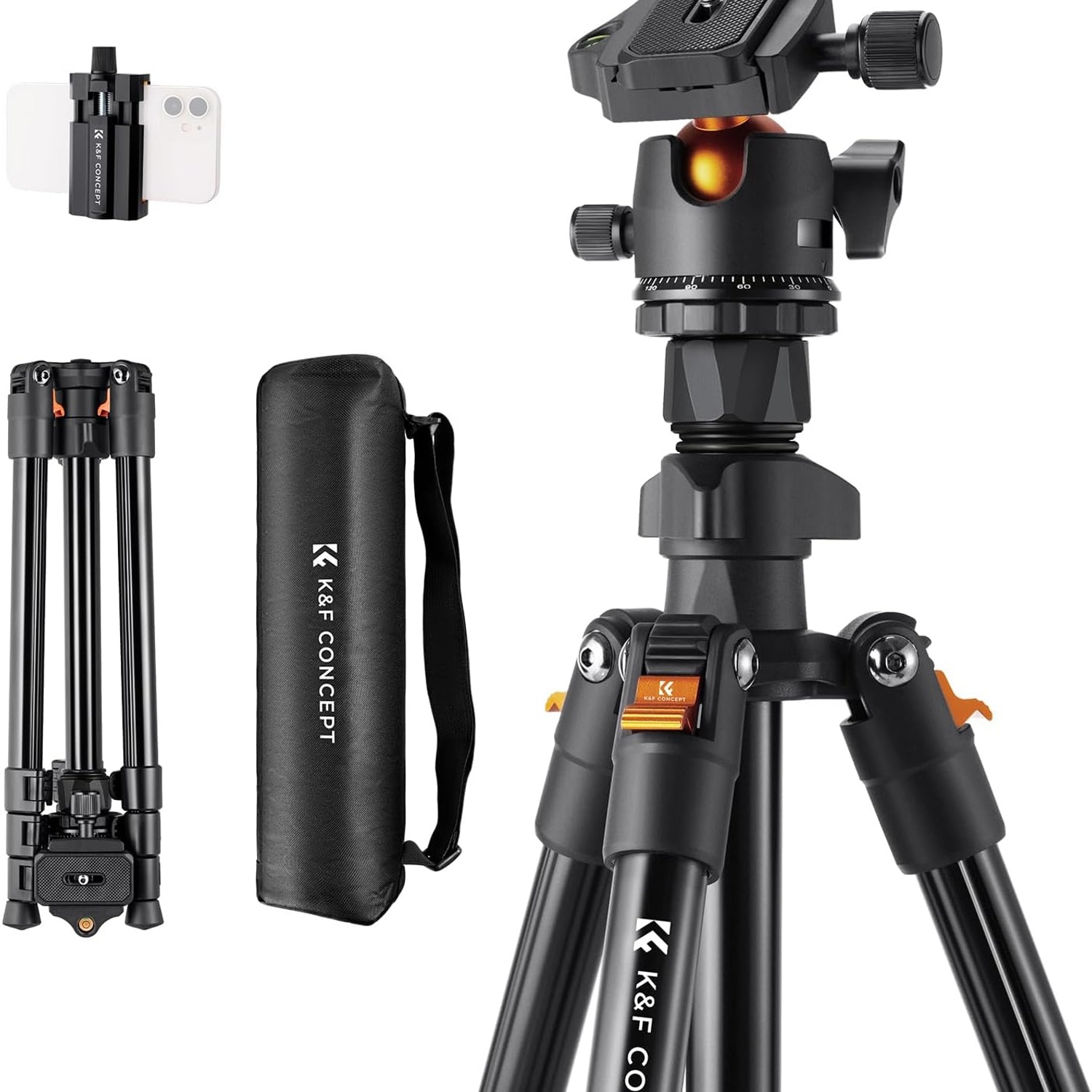
163cm Lightweight Travel Camera Tripod with 28mm Ball Head

€111.99
  • 163cm Max Height
  • 1.15kg Carry Weight
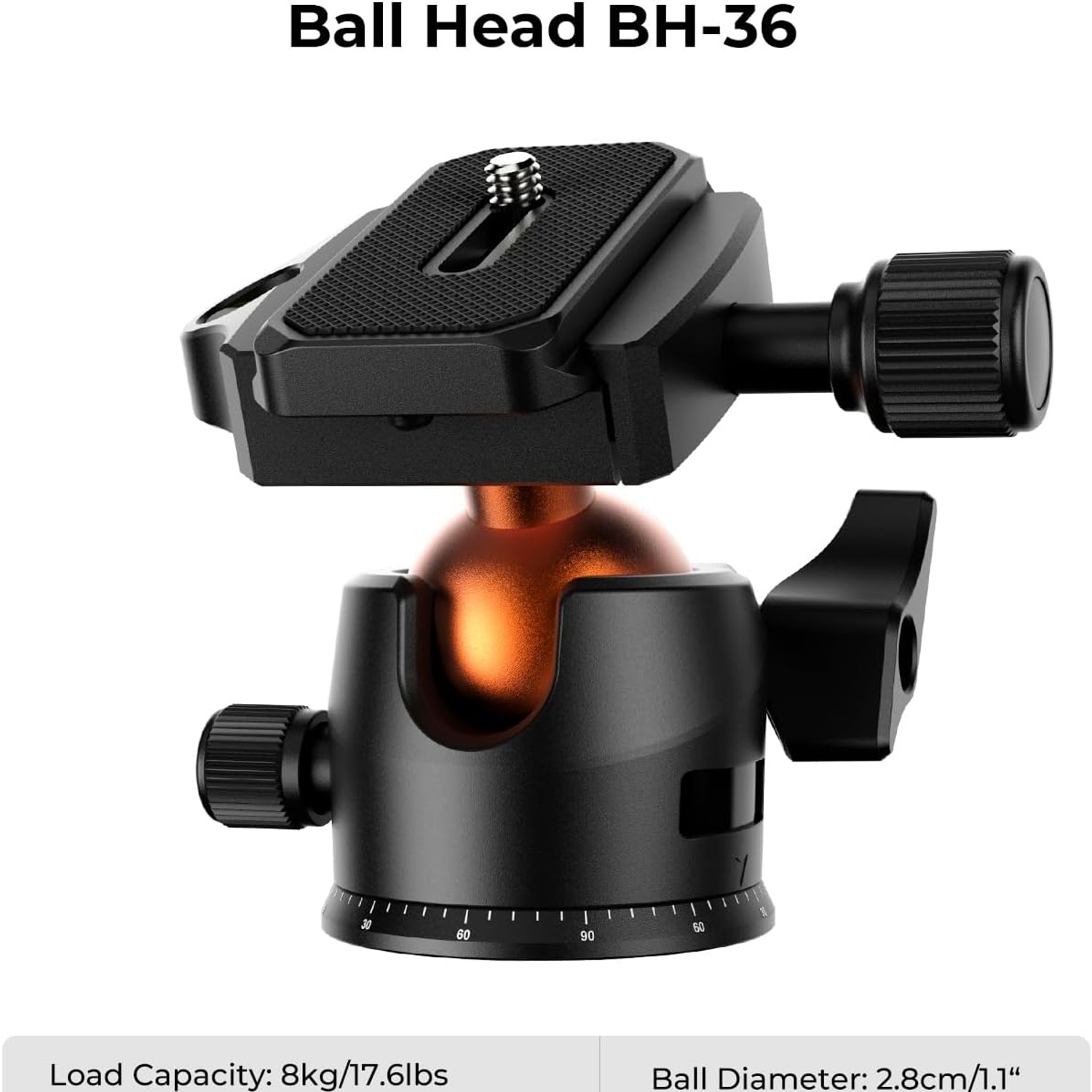
  • 28mm Ball Head
  • One-Hand Flip Locks

Price: €111.99

  • Free tracked delivery across Ireland on orders €120+, otherwise a flat €15
  • Pay by card or PayPal, handled by the payment provider
  • 14 days to change your mind, plus your statutory rights
Product specifications
Model NameKF09.101V1
Model NumberK234A0+BH-28L
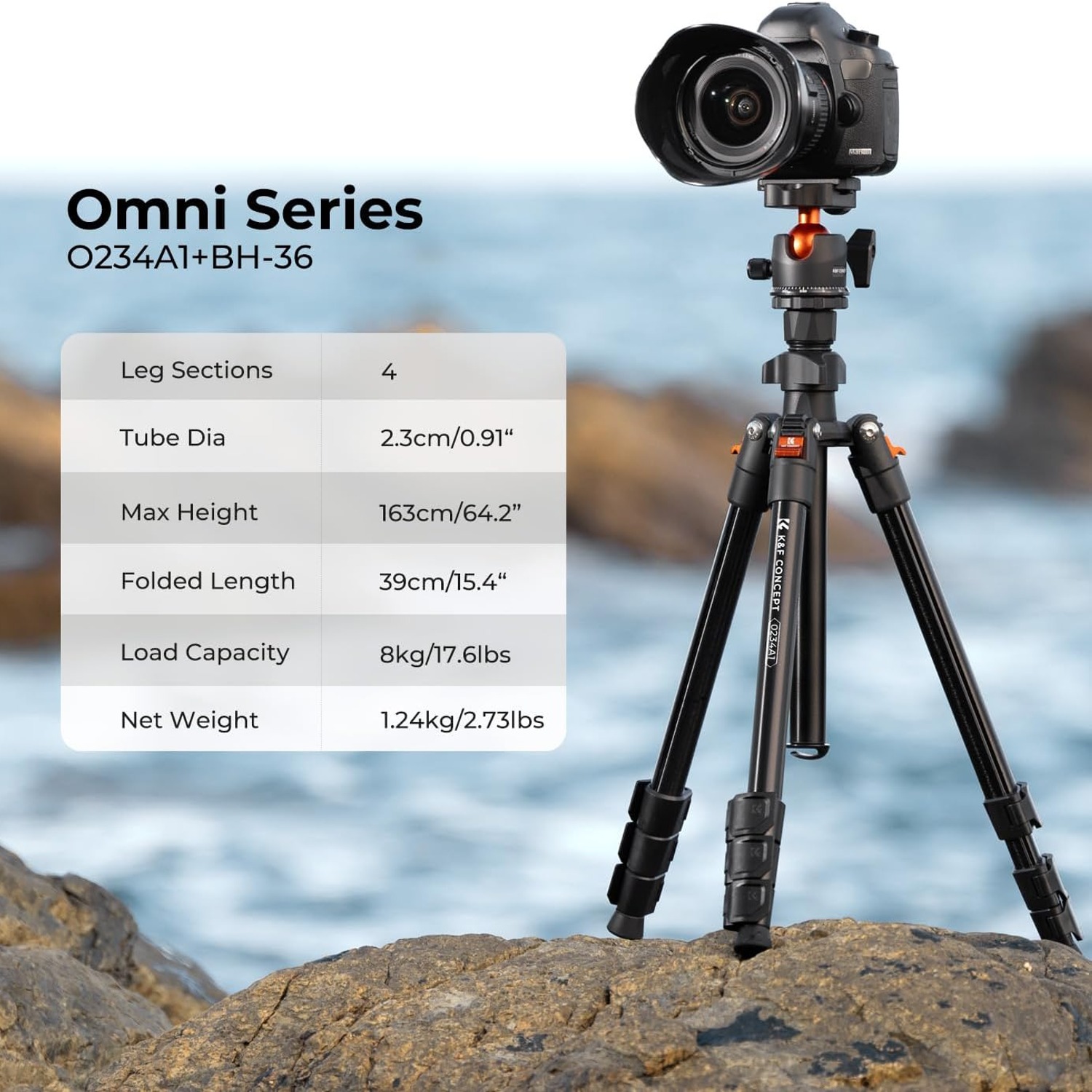
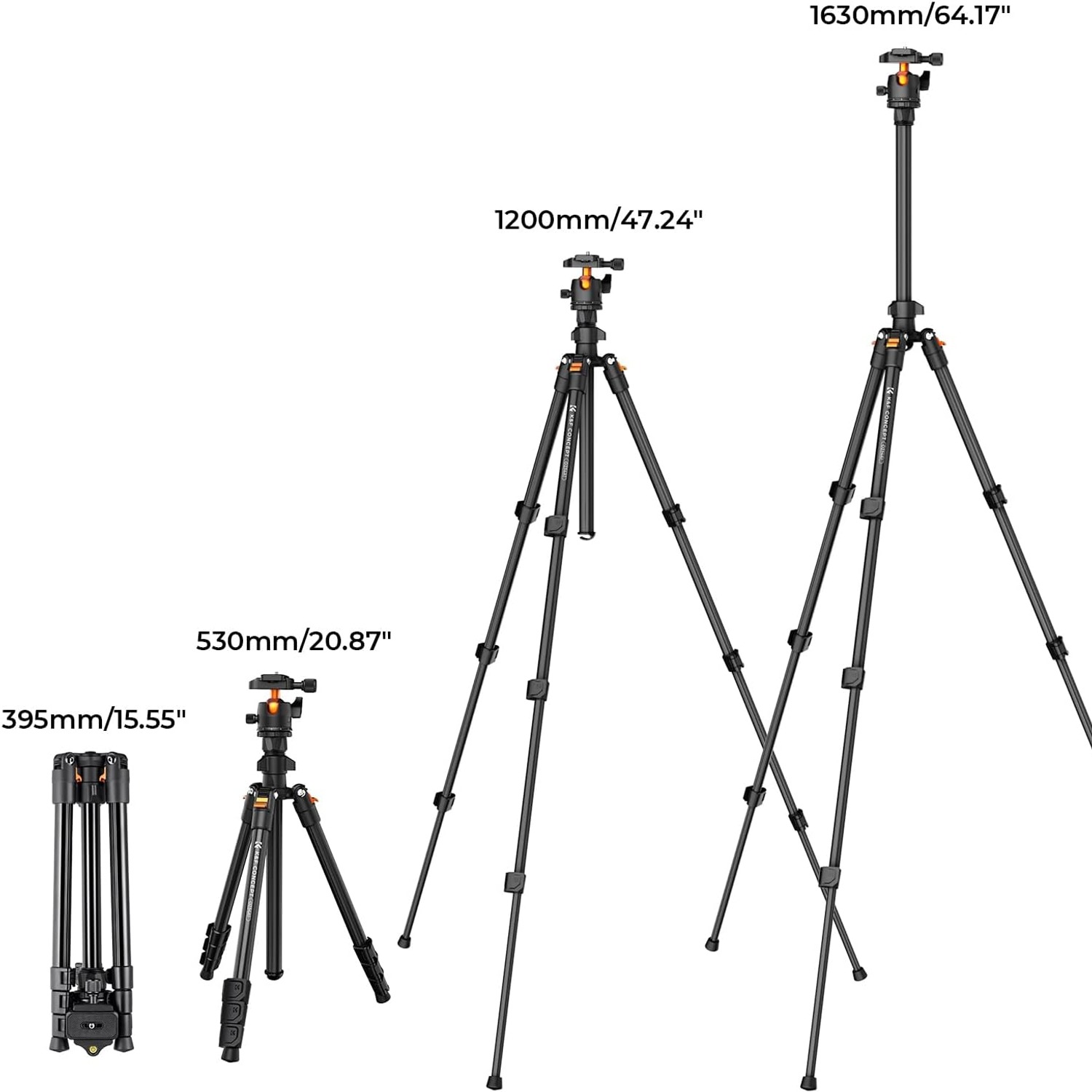
Maximum Height163 cm
Minimum Height52 cm (20.4 inches)
Folded Size39 cm (15.4 inches)
Item Weight1.15 kg
Weight Limit8 kg
Head TypeBall head, 28 mm
Leg Sections4
Leg Lock TypeQuick flip locks
MaterialAluminium
ColourBlack and Orange
Mounting ThreadStandard 1/4 inch
Included ComponentsQuick release plate, tripod head
Item Dimensions (D x W x H)39.1 x 52 x 163 cm
Compatible DevicesCamera
Water ResistanceNot water resistant
Number Of Packs1
Weight1.15 kg
Shipping & returns

Tracked delivery anywhere in Ireland. It is free on orders of €120 or more, and a flat €15 below that.

Under the Consumer Rights Act 2022 you have 14 days from delivery to cancel for any reason, and a further 14 days to send it back in resaleable condition. We refund the price you paid, including standard delivery. You cover the cost of returning it unless the item is faulty.

If it arrives faulty, damaged or not as described, we put it right at no cost to you under the Consumer Rights Act 2022 and the EU Sale of Goods Directive 2019/771, return postage included.

Shipping details · Refunds and returns

163cm Max HeightFour leg sections take you from 52cm up to eye level without a step stool.
1.15kg Carry WeightLight enough to clip to a daypack for a full day of walking and shooting.
28mm Ball HeadSmooth 360 degree panning so you can frame a scene and lock it off.
One-Hand Flip LocksOpen or close all four sections in seconds, even with gloves on.

Steady shots at any height with a camera tripod 163cm tall that still folds down small enough to carry all day.

Four-section aluminium legs, flip locks you can open one-handed, a 360 degree metal ball head and an 8 kg weight limit make this a practical pick for travel, landscapes and video.

This camera tripod 163cm model extends from a low 52cm all the way up to a comfortable eye-level working height.

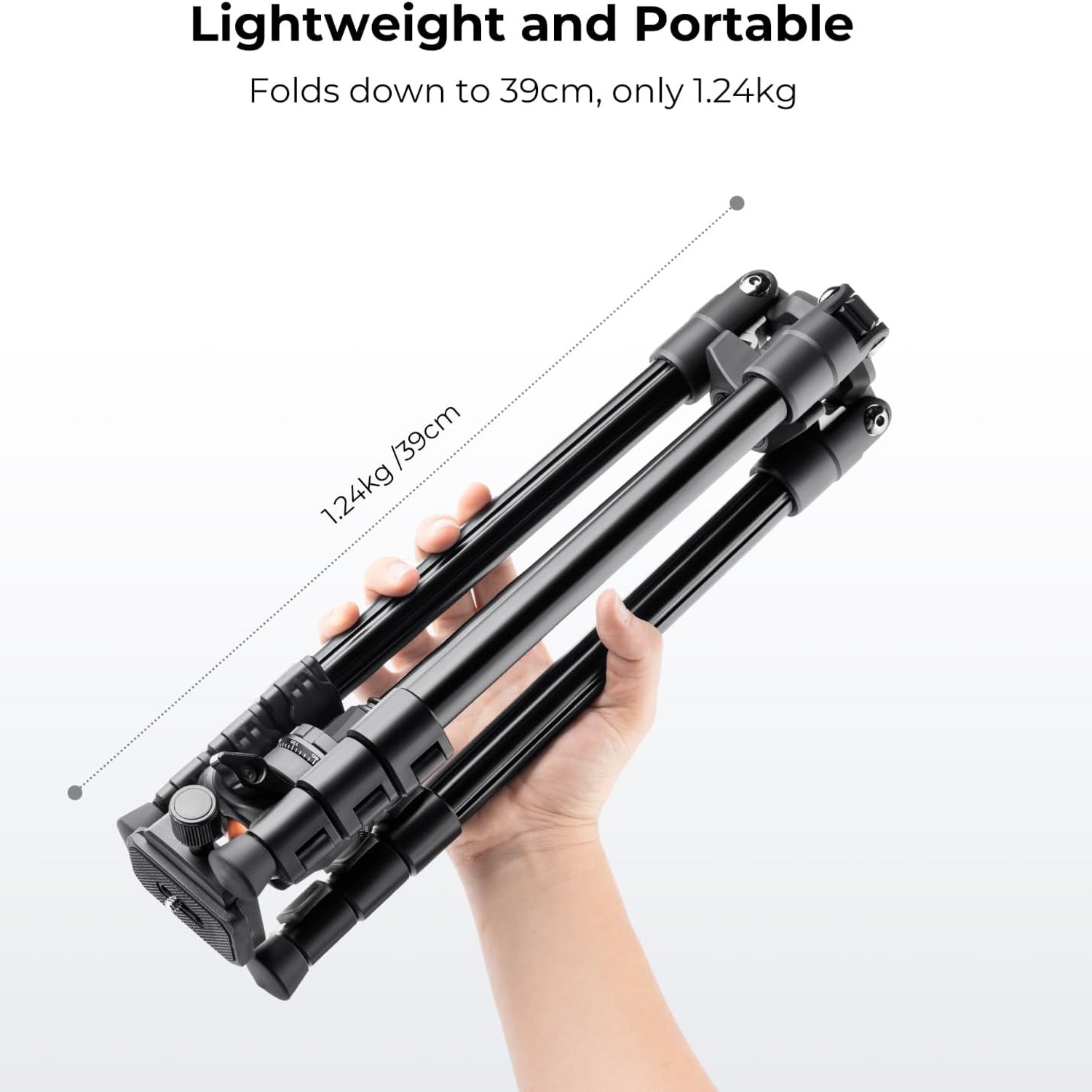
It folds down to just 39cm and weighs 1.15 kg with the head attached, so it fits inside most carry bags.

The 28mm metal ball head rotates a full 360 degrees for panoramas, level horizons and quick reframing.

Quick flip leg locks let you set up or pack down one-handed in a few seconds.

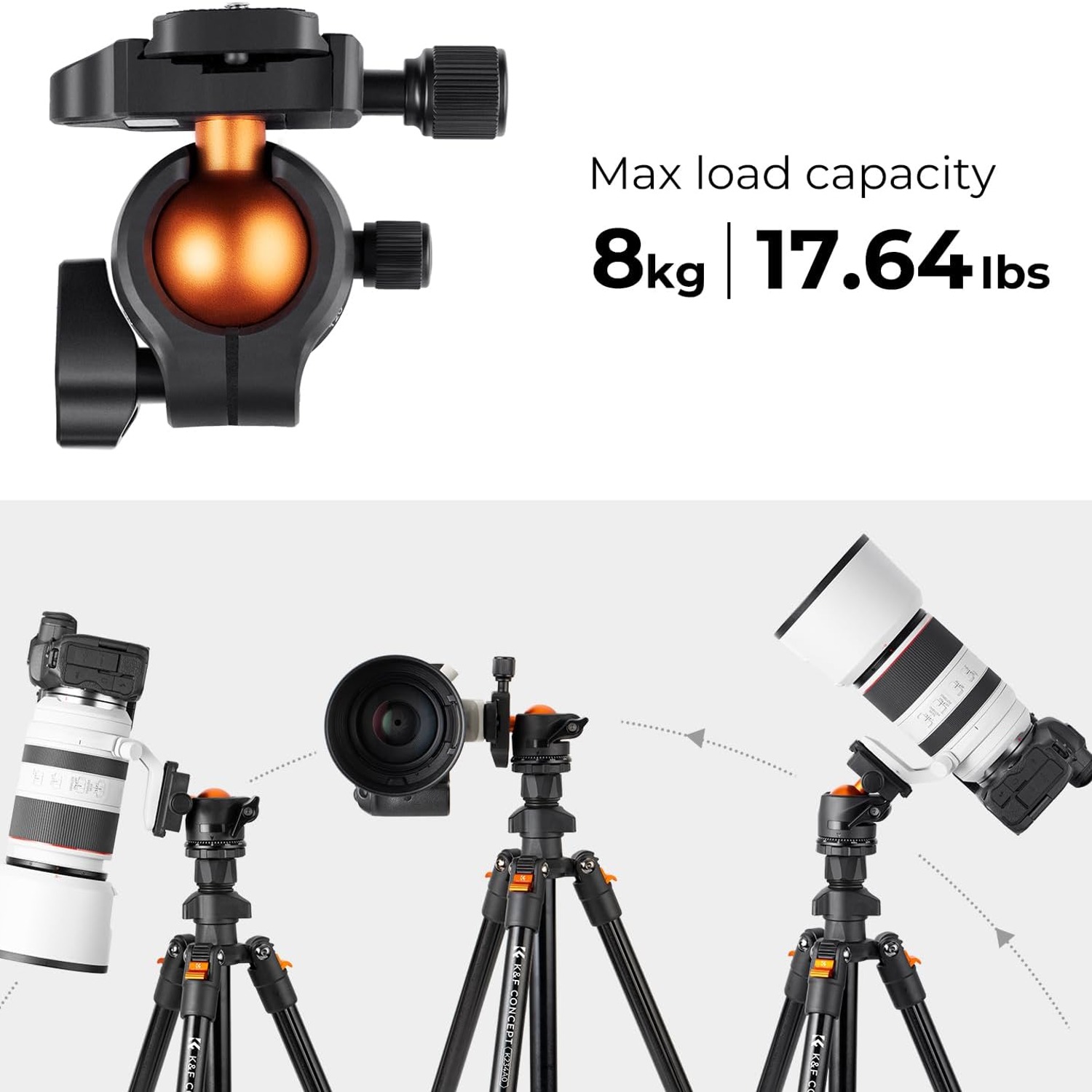
An 8 kg weight limit handles a DSLR with a decent lens, a mirrorless body, a projector or a small telescope.

163cm Lightweight Travel Camera Tripod with 28mm Ball Head

Most people buy their first tripod because a photo did not come out the way they saw it. The light was low, the shutter stayed open a beat too long, and what should have been a sharp scene turned into a soft smear. A tripod fixes that by taking your hands out of the equation. This one gets to 163cm at full stretch, which puts the camera near eye level for most adults, and drops to 52cm when you want a lower, more grounded angle.

163cm Lightweight Travel Camera Tripod with 28mm Ball Head

The legs are four-section aluminium with quick flip locks. Flip locks are the fast option. You can release all four sections on a leg with one hand, push them out, and snap them shut again in a couple of seconds. That matters more than it sounds when the light is changing and you are chasing a sunset, or when you are setting up and packing down a dozen times on a walk. Aluminium is heavier than carbon fibre but it costs less and shrugs off knocks, which suits a tripod that lives in the boot of a car or gets strapped to the outside of a pack.

163cm Lightweight Travel Camera Tripod with 28mm Ball Head

On top sits a 28mm metal ball head with a 360 degree panning base. A ball head is the simplest kind to use. Loosen one knob, move the camera wherever you want, tighten the knob again. The separate pan rotation lets you swing the camera sideways while keeping the horizon level, which is how you shoot a panorama or follow something moving across a scene. The included quick release plate screws to the base of your camera and clips straight into the head, so you can lift the camera off for a handheld shot and drop it back without fiddling with screws.

163cm Lightweight Travel Camera Tripod with 28mm Ball Head

The centre column can be mounted upside down, and a short centre column is also included. That combination is what opens up the very low angles, useful for flowers, insects, product shots on a table, or anything where you want the lens close to the ground. The standard 1/4 inch thread fits most cameras, so a DSLR, a mirrorless body, a compact, a projector or a small telescope will all mount. The stated weight limit is 8 kg, which is generous for the size, though as a general rule it is wise to keep your actual gear well under any tripod's maximum for the steadiest results.

163cm Lightweight Travel Camera Tripod with 28mm Ball Head

Folded, it is 39cm long and tips the scales at 1.15 kg including the head. That is the number that decides whether a tripod comes with you or stays home. It will slide into a carry-on bag, fit across the bottom of a daypack, or sit in a side pocket with the strap over the top. If you have been leaving a bigger tripod behind because carrying it is a hassle, this is the size class that solves that problem.

Not sure yet? That is fine.

A camera has to suit the job you bought it for, and you cannot always judge that from a photograph. Under the Consumer Rights Act 2022 you have 14 days from delivery to cancel for any reason, and a further 14 days to send it back in resaleable condition. We refund the price you paid, including standard delivery.

If it turns up faulty, damaged or not as described, that is on us. The Consumer Rights Act 2022 and the EU Sale of Goods Directive 2019/771 covers you, and we pay the return postage. Read the full detail on our refunds and returns page, or ask us anything before you order.

Frequently Asked Questions

What is included in the box?

The tripod ships with the tripod head already paired to it and a quick release plate for mounting your camera. A short centre column is also part of the package for low-angle work. Those are the components listed in the maker's details.

How tall does this tripod actually get?

Maximum height is 163 cm with all four leg sections extended and the centre column raised. Minimum working height is 52 cm. For most adults that upper figure puts the viewfinder at or near eye level when standing.

How do I work out the right tripod height for me?

A simple guide is your own height minus about 15 cm, minus the height of your camera body on the head. If you are around 175 to 180 cm tall, a 163 cm tripod sits very close to comfortable. Taller users may need to bend slightly or raise the centre column fully.

How small does it fold down?

Folded length is 39 cm, or 15.4 inches. That fits inside most carry-on bags and across the base of a daypack. It is one of the main reasons people choose this size as the best compact tripod for hiking.

How much does it weigh?

Net weight is 1.15 kg with the ball head attached. That is light enough to carry all day without thinking about it much. A lighter tripod is a tripod you actually bring, which is the whole point.

What is the maximum load it can hold?

The stated weight limit is 8 kg. In practice it pays to leave headroom, so if your camera plus lens weighs 2 kg you are comfortably inside the rating. Heavier setups closer to the limit will still mount but will be more sensitive to wind and vibration.

Will my DSLR fit on it?

Yes. The head uses a standard 1/4 inch thread, which is the common mounting size on DSLRs, mirrorless bodies and most compacts. This is why it works as a dslr tripod with ball head for everything from entry-level kit to mid-range bodies.

Can I use it with a mirrorless camera?

Mirrorless bodies are generally lighter than DSLRs and mount on the same 1/4 inch thread, so they are a natural fit. If you are hunting for the best tripod for mirrorless cameras, the low folded size here is a good match for the smaller body style.

What is a ball head and why does it matter?

A ball head holds the camera on a rotating sphere clamped by a single knob. Loosen it, point the camera anywhere, tighten it again. It is faster than a three-way pan and tilt head, which is why it suits travel and changing scenes.

How big is the ball head?

The ball head measures 28 mm and is made of metal. It includes a 360 degree panning dial separate from the main ball movement. That lets you keep the horizon level while swinging the camera sideways.

Can I shoot panoramas with it?

Yes. Level the camera using the ball, lock it, then use the 360 degree pan base to rotate in steps. Keeping the ball locked while only the pan base moves is what keeps your horizon consistent across frames.

What are flip leg locks and are they better than twist locks?

Flip locks are lever clamps you push open and snap shut. They are faster to operate and you can release several at once with one hand. Twist locks are simpler to clean and service, so neither is universally better, but flip locks win on speed.

How many leg sections does it have?

Four. More sections mean a shorter folded length, which is why this tripod packs down to 39 cm. The trade-off is slightly thinner bottom sections, so for maximum stability leave the thinnest section retracted when you do not need the full height.

What are the legs made of?

Aluminium. It is tougher against knocks than carbon fibre and costs noticeably less. Carbon fibre is roughly 30 percent lighter at the same size but carries a higher price, so aluminium is the practical choice for most buyers looking for the best aluminium tripod.

Can I shoot very low to the ground?

Yes. The centre column can be installed inverted, and a short centre column is included for the same purpose. Between those two options you can get the lens close to the ground for macro, flat lays and ground-level landscape work.

Does it come with a quick release plate?

It does. The plate screws onto the base of your camera and clips into the head, so you can take the camera off and put it back in a second. It is designed to suit most Arca-Swiss style quick release systems.

Is it suitable for video?

It will hold a camera steady for locked-off video and slow repositioning between shots. A ball head is not built for smooth continuous pans the way a fluid video head is, so for moving shots you may want a dedicated video head. For static interviews and talking-head clips it works well.

Can I use it for vlogging?

Yes, particularly for seated or standing pieces to camera where the tripod is parked in one spot. The low 52 cm minimum height is handy for desk setups. People looking for the best tripod for vlogging often value the fast flip locks for quick height changes.

Will it hold a telescope or a spotting scope?

The 1/4 inch thread and 8 kg load rating suit small telescopes and spotting scopes. Check your scope's mounting thread first, as some use a larger 3/8 inch fitting and need an adapter. Keep the total weight well inside the rating for a steady view.

Can I mount a projector on it?

Many compact projectors have a 1/4 inch tripod socket on the base and will fit directly. Confirm your projector's weight sits comfortably under the 8 kg limit. Raising it on a tripod is an easy way to get the image height right without stacking books.

Is it stable in wind?

Any lightweight tripod is more affected by wind than a heavy one. Lower the centre column, spread the legs wide, and leave the thinnest leg section retracted if you can. Hanging a bag from the centre column also adds useful downward weight.

Is it waterproof?

No. the maker's details lists it as not water resistant. It will handle light spray and damp mornings without drama, but do not submerge the legs, and dry it thoroughly if it gets wet.

Can I use it at the beach?

You can, with some care. Salt and sand are what wear tripod legs out. Rinse the lower sections with fresh water afterwards, extend them fully, and let them dry before folding away.

How do I clean it?

Wipe the legs and head with a soft dry cloth. Brush grit out of the leg joints before collapsing the sections, since trapped sand scratches the tubes. Avoid solvents and household cleaners on the ball head.

Does it need any maintenance?

Very little. Check the quick release plate screw and the ball head knob occasionally and hand-tighten if they have worked loose. Keep the leg locks free of grit and they will keep working smoothly for years.

What colour is it?

Black with orange accents. The orange detailing makes the leg locks easy to spot, which is genuinely useful in low light or when the tripod is lying in grass.

Does it come with a carry bag?

the maker's details lists the quick release plate and tripod head as the included components, so a bag is not confirmed here. The 39 cm folded length fits most generic tripod bags and slides easily into a backpack.

Is this a good first tripod?

It is a sensible starting point. The height range covers most everyday shooting, the ball head is easy to learn, and the weight means it gets used rather than left at home. Many people shopping for the best budget camera tripod land in this size and weight class.

How is it delivered and how long does it take?

Orders are shipped to the address you give at checkout, and you will receive tracking details once the parcel leaves the warehouse. Delivery times vary by country and region. Current estimates are shown at checkout before you pay.

What if it is not right for me when it arrives?

If the tripod is not what you expected, get in touch with our team and we will walk you through the return options. Keep the original packaging where you can, as it makes the return trip easier. We would rather sort out a swap or a refund than have you stuck with gear that does not fit how you shoot.

How to Choose a Travel Tripod That You Will Actually Carry

6 min read Camera Company

The photo you nearly got

There is a particular kind of frustration that comes from a photo that was almost right. The scene was good, the light was good, and then you look at it later on a bigger screen and the whole thing is just slightly soft. Not blurred from motion in the frame, just soft, like someone breathed on the lens.

That is usually camera shake. In dim light your shutter stays open longer, and the small movements of your hands get recorded along with everything else. Hand-held you can get away with a lot, but not with everything. Sunsets, interiors, night scenes, long exposures of water, group shots where you want to be in them, any kind of serious video, those all want a tripod.

The problem is that the tripod most people buy first is too heavy. It sits in a cupboard. It comes out twice a year. The one you want is the one light enough that bringing it is not a decision you have to make.

What the numbers on this one mean

Four figures tell you most of what you need to know about any tripod: maximum height, folded length, weight and load rating. This one reads 163 cm, 39 cm, 1.15 kg and 8 kg.

Maximum height of 163 cm is the useful end. With the legs out and the centre column up, a camera on top sits near eye level for most adults. That matters because a tripod you have to stoop over all day is a tripod you resent. The rough rule photographers use is your own height, minus about 15 cm, minus the height of the camera body. Someone around 175 cm tall lands comfortably in range here.

Folded length of 39 cm is the travel number. That fits inside carry-on luggage, lies flat across the bottom of a daypack, and can be strapped to the outside of a pack without sticking out like a flagpole. Shorter folded lengths come from more leg sections, which is why this one has four rather than three.

Weight of 1.15 kg includes the ball head. There is a psychological threshold somewhere around 1.5 kg where a tripod stops feeling like a burden. Sitting under that mark is the difference between gear you carry and gear you own.

Load rating of 8 kg is the amount of camera the tripod is built to hold. Most people never get close. A mid-range DSLR with a zoom is about 1.5 to 2 kg. Standard advice is to pick a tripod rated for at least double your gear weight, and this one leaves plenty of room.

How the legs and locks work

The legs are aluminium in four telescoping sections, held by flip locks. A flip lock is a small lever you push open to release a section and snap shut to hold it. You can flick all three locks on one leg with a single hand motion, extend the leg, and snap them closed again. Do that three times and you are set up.

The other common system is a twist lock, where you rotate a collar to grip the tube. Twist locks are simpler to take apart and clean, which is a real advantage if you shoot a lot on sand or in dust. Flip locks win on raw speed and are easier to operate with cold or gloved hands. Neither is the correct answer for everyone, but if you are setting up and packing down repeatedly through a day, the flip locks pay off.

On the material question, aluminium versus carbon fibre comes down to money. For a tripod of the same size, carbon fibre weighs roughly 30 percent less and handles vibration slightly better. It also costs considerably more. Aluminium takes knocks well, which counts for something when your tripod lives in a car boot. For most people, the best lightweight camera tripod is an aluminium one bought at a sensible price and used often.

The head is the part you touch

Legs hold things up. The head is what you actually interact with, and it is the part people underestimate.

This is a 28 mm metal ball head. The camera sits on a ball clamped inside a housing. Loosen the knob and the camera moves freely in any direction. Find your framing, tighten the knob, and it holds. That is the whole operation, and it is why ball heads dominate travel photography. There is no sequence of three separate knobs to work through.

Separate from the ball is a 360 degree panning base. You level the camera with the ball, lock it off, then rotate only the pan base. The horizon stays level while the camera swings sideways. That is how you shoot a multi-frame panorama that stitches together cleanly, and how you follow something moving across a landscape without the frame tilting.

The included quick release plate is a small thing that changes how often you use the tripod. It screws to the base of your camera and stays there. When you want the tripod, the camera clips in. When you want to go hand-held, it lifts straight out. No screwing and unscrewing while light fades.

Getting low

The centre column on this tripod can be mounted upside down, and a short centre column comes in the box for the same purpose. Both let you drop the camera far closer to the ground than the normal 52 cm minimum.

This opens up a set of shots most people never attempt. Flowers from their own level rather than from above. Insects. Rock pools. Texture in sand or leaf litter. Product photos on a low surface. Shooting from down low also changes landscapes a lot, giving foreground elements real presence against the sky. If you have ever wondered why someone else's photo of the same scene looks more interesting than yours, the answer is often that they got lower.

Choosing well, and using it well

A few things worth thinking about before you buy any tripod.

Match it to your heaviest setup, not your lightest. If you own a long telephoto and plan to use it on this, the extra weight sits further from the centre and puts more strain on the head. Shorter lenses are no concern at all.

Think about where you will use it. A tripod that mostly lives indoors or on calm days has an easy life. One that goes out in wind on exposed clifftops needs a bit of technique: legs spread wide, centre column down, thinnest leg section left retracted, and a bag hung from the column for ballast.

Think about the mount on your other gear too. The standard 1/4 inch thread here fits cameras and many compact projectors and small scopes. Larger telescopes and some heavier gear use a 3/8 inch thread and need a cheap adapter.

For care, the rule is simple. Grit is the enemy. Brush sand and dust off the leg tubes before you collapse them, because anything trapped between sections gets dragged along the tube and scratches it. If you shoot near the sea, rinse the lower legs with fresh water, extend them fully, and let them dry before folding. The tripod is not water resistant, so do not stand it in a stream and walk away.

The short version

This is a four-section aluminium tripod that goes from 52 cm up to 163 cm, folds to 39 cm, weighs 1.15 kg with the head on, and is rated to carry 8 kg. It has a 28 mm metal ball head with a 360 degree pan base, quick flip leg locks, a quick release plate, and the ability to invert the centre column for low-angle shots. The thread is a standard 1/4 inch, so most cameras mount directly.

If you want a tripod for landscapes, travel, night scenes, locked-off video or getting yourself into the family photo, and you want one small enough that carrying it is not a chore, this is the shape of thing that fits. The heavier studio tripods are better in a studio. This one is better on a walk.

Browse the shop

Still deciding on height or load?

Tell us what camera and lens you shoot with and we will let you know whether this tripod is the right match.

Ask us a question

Page summary

The K&F CONCEPT KF09.101V1 (model number K234A0+BH-28L) is a four-section aluminium camera tripod with a 28mm metal ball head. It extends to a maximum height of 163 cm, works down to a minimum of 52 cm, folds to 39 cm and weighs 1.15 kg with the head fitted. The stated weight limit is 8 kg. Legs use quick flip locks that can be operated one-handed. The head offers 360 degree panning and ships with a quick release plate. The centre column can be inverted and a short centre column is included for low-angle shooting. The mount uses a standard 1/4 inch thread, suiting cameras, DSLRs, projectors and telescopes. Colour is black and orange. It is not water resistant. Country of origin is not specified by the maker.